Thursday, July 30, 2015

The 20 Weirdest Words Added to the Dictionary Because of Technology

Whether we like it or not, dictionaries are living, breathing documents, and new words are added to them regularly.

Although the Oxford English Dictionary editors get the final say, they actually look to us to dictate whether a word should be added. In other words, we have no one but ourselves to blame for all the weird words that make the cut every year.

But we can at least share the blame with technology. None of us would be saying “srsly” if we hadn't felt the urge to shorten words for text messages and emails. We wouldn’t be voting anyone off the island if not for the television series Survivor. And, perhaps most importantly, there would be no need for the word “meatspace” without the existence of the virtual world. (One could argue there is still no need.)

Want to see what weird words were added to the OED thanks to internet slang and technology? Read on.

20 Weird Words Added to the Dictionary Thanks to Technology

1) Screenager (n.)

A person in their teens or twenties who has an aptitude for computers and the internet.

“Clever games designers have worked out exactly how to push the buttons of screenagers in the way other media have failed to do.”

2) Meatspace (n.)

The physical world, as opposed to the virtual world.

“I’d like to know a little more before we get together in meatspace.”

3) Slacktivism (n.)

Actions performed via the internet in support of a political or social cause but regarded as requiring little time or involvement, (e.g. signing an online petition or joining a campaign group on a social media website).

“Such email alerts make slacktivism easy.”

4) Al desko (adv. & adj.)

While working at one’s desk in an office (with reference to the consumption of food or meals).

“An al desko lunch.”

5) MOOC (n.)

A free course of study made available over the internet to a very large number of people.

“Anyone who decides to take a MOOC simply logs on to the website and signs up.”

6) Netiquette (n.)

The correct or acceptable way to use the internet.

“Should there be some kind of protocol or netiquette associated with directing large volumes of traffic to other websites?”

7) Dox (v.)

To search for and publish private or identifying information about a particular individual on the internet, typically with malicious intent.

“Hackers and online vigilantes routinely dox both public and private figures.”

8) First World problem (n.)

A relatively trivial or minor problem or frustration (implying a contrast with serious problems such as those that may be experienced in the developing world).

“It’s a First World problem, but still if you’re staying at a 5-star resort you expect some decent service.”

9) Srsly (adv.)

Seriously.

“Srsly though, I see where you’re coming from.”

10) Cyberchondriac (n.)

A person who compulsively searches the internet for information about particular real or imagined symptoms of illness.

“Everybody is terribly health-conscious these days – it’s not a surprise that many people are becoming cyberchondriacs.”

11) Lamestream (adj. & n.)

Used to refer contemptuously to the mainstream media.

“Why as the lamestream media been so silent on the issue?”

12) Gigaflop (n.)

A unit of computing speed equal to one billion floating-point operations per second.

“He said the latest terascale supercomputing system has several hundred gigaflops of sustained power.”

13) Fat finger (n.)

Used to refer to clumsy or inaccurate typing, typically resulting from one finger striking two keys at the same time.

“The programming problem turned out to be a case of fat finger.”

14) Nom nom (exclamation)

Used to express pleasure at eating, or at the prospect of eating, delicious food.

“Chili and cornbread for dinner, nom nom!”

15) Egosurf (v.)

To search the internet for instances of one’s own name or links to one’s own website.

“I decided to take a break and do a little egosurfing.”

16) Boyf (n.)

A person’s boyfriend.

“She’s just been dumped by her boyf.”

17) Vote (someone or something) off the island (v.)

To dismiss or reject someone or something as unsatisfactory.

“When a CEO gets voted off the island, the CFO typically gets dumped, too.”

18) Phablet (n.)

A smartphone having a screen which is intermediate in size between that of a typical smartphone and a tablet computer.

“A 3.5-inch screen is inadequate in a market that is trending toward phablets.”

19) Woot (exclamation)

Used to express elation, enthusiasm, or triumph, especially in electronic communication.

“I definitely get Fridays off, woot!”

20) Facepalm (n.)

A gesture in which the palm of one’s hand is brought to one’s face as an expression of dismay, exasperation, embarrassment, etc.

“I’m pretty sure said friend now thinks Anne and I are dating – facepalm!”

Facepalm is right.

learn more about INBOUND 2015  


from HubSpot Marketing Blog http://bit.ly/1I46cwB

Mobile Marketing


from Tumblr http://bit.ly/1MvxAXt

Visual Content Marketing: A Resource Guide for Marketers

Do you want to discover how to better market yourself and your business with visual content? Are you looking for a resource guide for your visual content marketing efforts? This article will help you find tools to create the perfect image, drive traffic and engagement with your images and use visual content to improve your […]

This post Visual Content Marketing: A Resource Guide for Marketers first appeared on Social Media Examiner.
Social Media Examiner - Your Guide to the Social Media Jungle


from Social Media Examiner http://bit.ly/1KAvaHR
via IFTTT
Google My Business Listing
from Tumblr http://bit.ly/1IN3kYq

How to Write an Author Bio That Doesn't Suck

How-to-write-a-bio

If guest posting is part of your content distribution and promotion strategy, you’ve probably experienced this frustration.

Here’s what happens: You write a great article for a guest publication, and at the end, you’re compensated with a tiny, little paragraph about you. 

Unless you wrote the article for purely altruistic reasons, this paragraph, although little, is actually very important. Not only does it connect your name with the article, but it also provides space for links back to your website or social profiles. (Who wouldn’t want that little bit of glory?)

But what are you really supposed to write in that little paragraph? Wow do you make your author bio compelling, powerful, and effective without a whole lot of space?

Read on. You’re about to find out.

11 Tips for Writing an Author Bio That Doesn’t Suck

1) Write in the third person.

Different publications will have different standards, but the general practice is to write your bio in the third person.

Readers will know that you’re writing in the third person … and that’s okay. You can just come out and say it, like Mark John did:

If you find that you start overusing “he” or “she,” try supplementing it with your name to improve the flow.

(Note: Some publications, like Forbes, require that your bio be in the first person.)

2) Remember that it’s not really about you. 

Even though this paragraph is allegedly “about you,” it’s actually not about you at all. It’s about your reader. Sure, you’re the object, but your reader is the subject.

Here’s how Matt Southern created a bio that focuses on him, while also focusing on the reader: 

By explaining that he is in a position to help businesses, his bio serves as a nod to his readership.

Readers are the ones care about it, and act on it. Write for them.

3) Establish credibility.

Why are you qualified to write on this subject? Why should readers believe you?

Your bio should establish credibility. If you write, for example, on conversion optimization, you need to explain that you have some experience with conversion optimization. 

If you have academic degrees, list them, but only if it matters. Typically a bachelor’s degree is not considered outstanding enough to warrant a mention in your bio.

Forbes contributor Ian Morris wrote an this article on Windows 10:

Why is he qualified to write on this subject? Because, as his bio explains, he “covers mobile, internet services and the good and bad of tech.”

4) Explain what you do.

In social situations, people are interested in knowing “what you do.”

Aware that this is a popular question to ask when you’re getting to know someone, think of your bio as an opportunity to answer it. After all, it’s a meaningful fact, and it deserves a line.

Patrick’s bio covers this in the opening sentence:

And Kiel does the same thing in his Harvard Business Review bio:

5) Be personal … if it’s appropriate.

“Cat lover.”

“Coffee addict.”

“Avid outdoorsman.”

You’ll often read bios with little personal tidbits thrown in. But is this okay? Is it smart?

A better question: Is it appropriate?

Not every publication is going to need information about your feline affection or love for craft beer. With that said, tailor your tidbits to the audience and be sure to keep them at a minimum. Readers are only marginally interested in your personal life – this is not the place to divulge everything.

Kevan Lee of Buffer uses his bio to share his hobby: watching football. By placing this bit in the middle of his bio, he’s able to show personality while front loading his credibility and closing with a CTA:

And if it’s not the time or place for personality, don’t hesitate to keep things strictly professional, like Greg Finn: 

6) Focus on value.

It’s tempting to turn your bio into a trophy case – you’ve won awards, started a billion companies, been published in every awesome journal, etc. 

But who cares?

Readers want to know what’s in it for them. They may be impressed by your epic status, but they don’t really care unless it somehow connects with them. That’s where the idea of value comes in.

You want to write a bio that communicates what you can do for them. Peep Laja of ConversionXL does this really well:

Notice that final line: “Peep can help your company grow via his conversion optimization agency.”

That’s the kind of value that will connect you with readers in meaningful ways.

7) Don’t be afraid to brag.

If done right, bragging can be appropriate. (I will say, it’s much easier to brag if you’re doing it in the third person.)

So don’t be afraid to toss out a few awards that you’re proud of. Just make sure that they’re relevant to the subject matter and the publication.

Barry Feldman recently wrote an article on Kissmetrics explaining how to get to the top of Google in 10 minutes.

Is this legit? Is Barry even for real?

As it turns out, yes, we can trust Barry’s article, because Barry bragged:

 Sounds trustworthy to me, wouldn’t you agree?

8) Avoid writing something obnoxiously long.

Writing a super long bio makes you seem full of it. If all the other authors on the site have three lines, and you have thirty, this places your sense of self-importance front and center.

Richard Ridley, an award-winning author, recommends that you “keep it brief.” Here’s how he explains it:

Brevity is the soul of wit. Even if you’re William Shakespeare, you don’t want to write an author bio that fills up the entire back cover. In an odd twist of logic, the more accomplished you are as an author, the shorter your author bio can be.“

You have an ego. That’s okay. Just don’t let it show that much. Here’s a great example of a short-and-sweet bio from Orbit Media Studios’ Andy Crestodina:

9) Customize it.

If the publication allows it, customize your bio. A universal bio that you copy/paste everywhere is okay, but you can squeeze a few more ounces of power out of your bio by tailoring it to your specific situation. HubSpot’s own Lindsay Kolowich does a great job customizing her bio:

By fine-tuning it to resonate with the summer season, Lindsay's bio stands out against the generic messaging we’ve grown used to seeing. 

10) Create an accompanying CTA.

The CTA is an omnipotent force in the marketing world, and it’s no different in your bio paragraph.

After reading your bio, you want your audience to do something. To start, hone in on what action you want them to take. 

The most common techniques are following on Twitter or visiting your blog. And while these options are effective, you want to be sure that your CTA is strategic given the context in which they are presented. 

For example, the author bio of Heather Hummel contains a link to her Amazon page, thus creating a source of possible sales:

Not a bad idea, right?

11) Steer clear of the word "freelance.”

Freelance writers are an exceptional group of people who are skillful, qualified, and expertly positioned to write great content. But with that said, I need to provide a warning …

Being a freelance writer is not the best way to establish credibility. Often times, a “freelance writer” is understood as a generalist – you may be good at writing, but are you good at the subject matter?

If you’re a freelance writer, you can say so in your bio, but take out the “freelance” and put a point on it. Here are some examples:

  • Fred is a conversion optimization writer, specializing in split testing best practices and cognitive biases.
  • Angie, a Portland-based author, helps people unleash their inner interior designer.
  • As a marketing writer, Todd’s favorite place to publish uncensored marketing content is his own blog.

The term “freelance” can sometimes weaken your bio, so avoid using it when possible. 

Ready to Write?

The best way to create a meaningful bio is to write it carefully and intentionally. Think about your readers, establish some credibility, and make it memorable. But go ahead and have some fun – you want to prove that you’re human, too.

At the end of the day, your little bio matters. People care. They’re going to read it. Make it matter.

And please don’t judge me by my bio.

learn more about INBOUND 2015


from HubSpot Marketing Blog http://bit.ly/1MviAcf

Mobile Marketing


from Tumblr http://bit.ly/1IN3kYn

Wednesday, July 29, 2015

The Non-Designer's Guide to Creating Better Blog Graphics [Infographic]

graphic-designer-at-work.jpg

You may not be a designer by trade, but as a content marketer, it’s your job to make sure you’re creating content compelling enough to hit your traffic, lead generation, social sharing, and engagement goals.

Adding images to your blog posts is one of the most important ways to get more readers, subscribers, and leads out of the content you spend so much time creating. After all, did you know that articles with images get 94% more total views than articles without images?

Luckily, you don’t have to be a designer to create awesome graphics for your blog posts. To get started, check out the infographic below from CoSchedule. You’ll learn basic tips for working in Photoshop, creating header images, and understanding what to visualize. The infographic also includes a list of great design resources available on the web. Take a look!

blog-graphics-infographic.png

learn more about INBOUND 2015


from HubSpot Marketing Blog http://bit.ly/1KzLVQy

Mobile Marketing


from Tumblr http://bit.ly/1OC70KZ

What to Do When Your Prospect Takes a Strange Turn in the Buyer’s Journey

[Cue Twilight Zone Music] There is another dimension beyond which is known to most marketers. It is a dimension that is vast and chaotic and as timeless as the sales process itself.

It is the middle ground between the introduction and the close, between engagement and disengagement, it lies between the deepest of our marketing fears and the heights of our marketing knowledge. This is the 4th dimension of the sales funnel. It is an area which we’ll call… The Sales Continuum.

We all have a concept of the sales funnel. It fits nicely into a very linear framework of time. The human mind loves this concept. We can easily process things that have a beginning, middle, and end. We attach these ideas to the sales funnel and imagine perfect scenarios where our top, middle, and bottom of funnel content is consumed in perfect order leading up to a sale.

Submitted for your approval: Five scenarios about what happens, and what to do, when your prospect has taken a strange turn in the buyer’s journey.

1) The Time Element

Your prospect first came to your attention on a Monday. They downloaded all of your content on one of your top offerings. They requested a demo that same week and had a successful first call with your team. They asked for a proposal, it was sent out by the end of the week, and then… nothing.

You reach out to them and they’ve lost a bit of their initial interest. Was this the same prospect from the previous week? Were they under some form of mind control?

You find out that the project has been de-prioritized. They won’t be making a decision for six months. So what do you do? 

  • Reach back out and talk to your prospect
  • Map out a communication strategy
  • Ask if you can send them a reoccurring calendar invite to check back in
  • Provide them with content or articles that they might find useful
  • Connect with your prospect on LinkedIn

On your follow up calls, see if things have shifted again. Ask them if you can provide them with anything else that would help them in their decision-making process. Make sure that you take every opportunity to ask about other potential projects where your organization might be able to help. 

2) Where is Everybody?

Your prospect has vanished from the face of the Earth. Well, not literally, but they’re not answering your calls. You’ve tried to email them, and you’re not getting an out of office message. You’re pretty sure they’re still around. They’ve been receptive to your messages in the past, so what do you do?

  • Vary your approach – If you’ve been talking to them in the afternoons, try reaching out to them early in the morning or vice-versa.
  • Reach out beyond – If you’re in B2B, then your prospect is likely not the only person who works at their company. Reach out to other people at the prospect company who might be involved in the deal and try to get a read for what’s going on. See if there might be others who are interested in your offerings.
  • Change your mode of communication – Depending on your relationship with the prospect, maybe you have options to tweet or text. If it’s not too old-school for you get out a pen and paper and send them a handwritten note of follow up.
  • Relax – There is a good chance that they’re not ignoring you. People get busy and your priorities aren’t always theirs. Don’t risk the relationship by inundating them with constant and potentially desperate sounding messages.

3) Spur of the Moment

Out of nowhere you get a request for a product or solution demo. The prospect has never been on your radar. It’s as if they’ve just arrived from another planet. They’re looking to make a decision very quickly. They’re also evaluating other options. It’s time to jump into action. Here are some rules for this kind of encounter:

  • Keep calm – They’ve done their research and have potentially been observing you from a distance for a while. Now it’s your time to prove to them that you know what you’re doing. Help them find out any additional details they need to help seal the deal.
  • Determine the size of this Unidentified First Opportunity – Get an understanding of the time and resources you want to devote towards this new potential customer.
  • Get to know these strange new beings - Dive in and do your research. Find out who your competition is. It’s time to play catch-up and get a better understanding of their needs and pain points.
  • Take them to your leader – Depending on the size of the opportunity, you may have to get your sales leaders immediately involved to try to close the deal.

4) A Nice Place to Visit

A prospect keeps downloading different top-of-the-funnel offers, they’ve subscribed to your blog, they follow you on social media, but they’ve never taken their engagement to the next level. They don’t seem to be interested in your middle-of-the-funnel or bottom-of-the-funnel offers.

They seem like a perfect fit for your services, but some unknown force is holding them back. How do you take them into the next dimension?  

  • If they’ve shown enough interest and you feel like they’re a great prospect, then assign them a dedicated contact.
  • Have your team reach out via personal email and phone. Let the prospect know that they have someone to contact if they need any help.
  • Try to find out what might be holding them back. Ask about their initiatives and see if they have a need or are just a tire kicker.

Your job here is to guide them between the prospect world and the customer world. Do what you can to help them on their journey to the end of your sales pipeline.

5) A Thing About Machines

Much like our last scenario, your prospect has entered into your sales funnel. Unlike last time, they are responsive to various email workflows. They have downloaded your middle-of-the-funnel content. But the aim of your marketing automation system is to get them to sign up for a demo, an in-person meeting, or your no-cost assessment.

These are the next logical steps, but they just aren’t taking those actions. You’ve done the next level outreach. They’ve even attended your webinars and taken phone calls with your team. What gives?

You’ve let machines do all of your talking for you up to this point. Don’t wait for your prospects to take action and only follow the programmed path. Take these two steps: 

  1. Build them personalized content – Even the best and most narrowly-focused, persona-driven content may not be speaking directly to your prospect. Build out a case that speaks specifically to this particular industry, company, and role.
  2. Take the engagement to the next level – Take that specific content that you just built and work to set up a face-to-face meeting with them to review the information and make your case.

Your marketing machines—computers, phones, software, email—helped you get the prospect’s attention. Now, this person may require a more direct approach, a more human approach. Work to get a meeting set up, and put one of your team members in the same room with the prospect. Don’t over-rely on your marketing automation tools to convert your prospects into customers.

Conclusion

There is a message to these stories and it is this: The Sales Continuum happens every day. No buyer is the perfect persona and no workflow can totally capture the nuanced relationship that a prospect has with your brand.

Once upon a time, there was a thing called inbound marketing and a thing called outbound marketing. In the end, it’s all about people marketing. Every story here combines the power of people with the service of machines. Until the sales robots write content, react to situations, can talk (and listen) effectively over the phone, or walk into a room, you’ll need smart, talented, and human sales and marketing professionals. They’ve always been the ones that help organizations like yours address the strangest turns in the buyer’s journey.

If you want to better understand the convergence between inbound and outbound marketing and why humans matter so much in the sales process, then download our ebook, How to Create a Love Story Between Inbound and Outbound Marketing.

New Call-to-action


from HubSpot Marketing Blog http://bit.ly/1gmoyjw

Mobile Marketing


from Tumblr http://bit.ly/1IqvbaA

13 Businesses With Brilliant Global Marketing Strategies

Thanks to the internet, global reach is no longer reserved for deep-pocketed brands, nor is it an incredible hassle for already over-burdened marketing managers.

In fact, a global presence is possible for any business with a creative strategy and an understanding of world markets. 

To give you an idea of what a great global marketing strategy looks like, we’ve compiled a list of brands that totally “get it.”

Download more examples of awesome marketing and advertising campaigns here.

From adapting their social strategies to translate across multiple languages to adjusting their menus to appeal to the cravings of a diverse group of people, these brands are taking positive steps towards creating a solid presence across the globe. 

So if you’re looking for inspiration on how to craft a successful international marketing strategy and expand your business’ reach, check out these examples from 13 successful companies.

13 Companies We Admire for Brilliant International Marketing

1) Red Bull

Austrian company Red Bull does such a great job with global marketing that many Americans assume it’s a local brand. How? 

One of its most successful tactics is to host extreme sports events all over the world. From the Red Bull Indianapolis Grand Prix to the Red Bull Air Race in the United Kingdom to the Red Bull Soapbox Race in Jordan, the brand’s powerful event marketing strategy takes them here, there, and everywhere. 

Screen_Shot_2015-07-28_at_10.27.32_AM.png

Aside from events, Red Bull’s packaging also plays a part in its global appeal. 

“Red Bull really looks like a product from a global economy. It doesn’t look like a traditional American soft drink – it’s not in a 12-ounce can, it’s not sold in a bottle, and it doesn’t have script lettering like Pepsi or Coke. It looks European. That matters," explains Harvard Business School professor Nancy F. Koehn in a 2001 article. Though it's since diversified its product selection since that article was published, the fact remains that Red Bull's consistent packaging has helped this brand go global.

2) Airbnb

Airbnb, a community marketplace for people to list and book accommodations around the world, was founded in 2008 out of San Francisco, California. 

Since then, Airbnb has grown to 1,500,000+ listings in 34,000+ cities worldwide. A large contributor to the company’s explosive global success? Social media. 

In January 2015, Airbnb launched a social media campaign around the hashtag #OneLessStranger. The company referred to the campaign as a "global, social experiment,” in which Airbnb asked the community to perform random acts of hospitality for strangers, and then take a video or photo with the person and share it using the hashtag.

Just three weeks after the launch of the campaign, over 3,000,000 people worldwide engaged, created content, or were talking about the campaign.

3) Dunkin Donuts

In case you missed it, National Donut Day was June 3rd. And while we were getting our hands dirty with a Boston creme (or two) here in the states, Dunkin Donuts China was serving up a fresh batch of dry pork and seaweed donuts. 
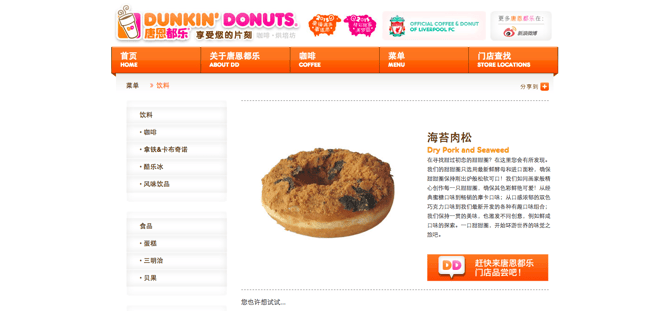
With over 3,100 stores in 30 countries outside of the U.S., Dunkin Donuts has evolved its menu to satisfy the sweet tooth of its global customers. 

From Korea’s Grapefruit Coolata to Lebenon's Mango Chocolate Donut to Russia's Dunclairs, it’s clear that Dunkin Donuts isn’t afraid to celebrate cultural differences in an effort to strengthen its international presence. 

4) Domino's 

Similar to Dunkin Donuts, Domino’s has prioritized menu innovation as a means of increasing international interest and awareness. 

“The joy of pizza is that bread, sauce, and cheese works fundamentally everywhere, except maybe China, where dairy wasn’t a big part of their diet until lately,” explains Domino’s CEO J. Patrick Doyle.

“And it’s easy to just change toppings market to market. In Asia, it’s seafood and fish. It’s curry in India. But half the toppings are standard offerings around the world.”
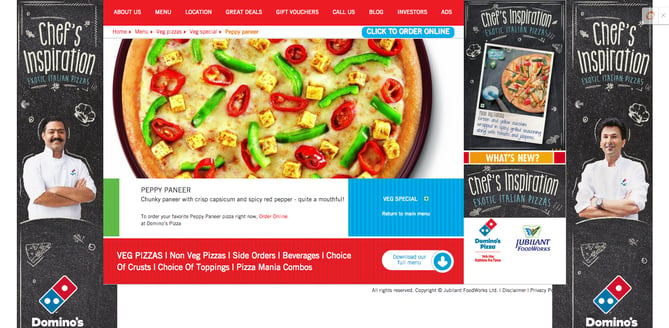
By making a conscious effort to gain a better understanding of the preferences of the markets it’s trying to break into, Domino’s is able to deliver pies diverse enough to gain international attention. 

5) Rezdy

Some companies may not be trying to attract global markets directly, but if their clients are, they better know how. Rezdy is an Australian-based reservation software designed to make online booking smoother for tourists and agents alike.

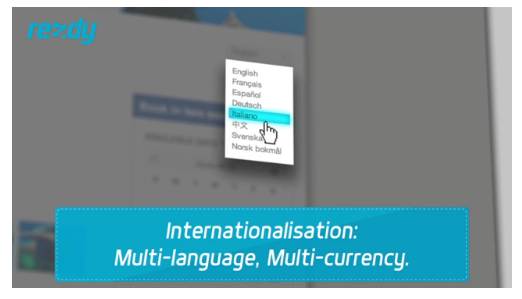
Though Rezdy’s clients are Australian-based, the company needs to cater to its clients’ international visitors. Click on the screen shot to check out this fun video on Rezdy’s homepage:

Screen Shot 2012 11 20 at 1.36.08 AM resized 600

The first feature the video spotlights is ‘Internationalisation.’ The video walks us through how easy the service is for users, but is sure to emphasize the language and currency customization tool upfront. Even if your company is marketing to other regional companies, consider their global customers as if they were your own. 

6) World Wildlife Foundation

WWF took its Earth Hour initiative – a voluntary worldwide event where participants turn off their lights for an hour to show how easy it can be to battle climate change – and brought it to Norway’s mobile audience.

Scandinavian countries like Norway experience extreme daylight hours in different seasons, making the country a prime candidate for WWF’s Blackout campaign. Using digital agency Mobiento, the nonprofit placed the Blackout Banner across Norway’s top media sites to promote Earth Hour. With one tap of the banner, the screen went black. Finger swiping the black screen slowly revealed the Earth Hour countdown. The banner attracted roughly 1,000,000 impressions and the campaign received three MMA Global Mobile Marketing Awards back in 2012.

Have a cool idea? Don’t be afraid to try it out on one international market – just make sure it’s the appropriate audience. (Also, don’t be afraid of the dark.)

7) Pearse Trust

With offices in Dublin, London, Vancouver, Atlanta, and Wellington, Pearse Trust has grown to be an international authority on corporate and trust structures. But it takes more than offices all over the map to reach an international audience.

That’s why Pearse Trust keeps content flowing on its Facebook page that engages its various markets. In this screenshot below, you can see Pearse Trust posts lots of content featuring international affairs relating to the company’s practice.

pearse_trust.png

It also levels out external articles with Pearse Trust content, featuring news from places like Germany, Ireland (where it has a Dublin office), and the U.K. (where it has a London office). This is a great example of focusing on common interests shared among your company’s various markets while also making the content relatable to customers by region. 

8) Nike

Nike has been able to evolve its global presence through the careful selection of international sponsorships such as its previous long-standing relationship with Manchester United.  

Although sponsorship spending can be fairly unpredictable – demand costs tend to surge due to triggers like championships and tournaments – these partnerships have certainly helped the brand capture the attention of a global audience. 

Nike’s NikeID co-creation platform serves as another strategy that the company is using to appeal to international markets.

By putting the power of design into the hands of the consumer, Nike is able to deliver customized products that align with different cultural preferences and styles. 

9) McDonald’s

We all know McDonald’s is a successful global brand, so unlike its menu, I’ll keep it light.

While keeping its overarching branding consistent, McDonald's practices 'glocal’ marketing efforts. No, that’s not a typo. McDonald’s brings a local flavor, literally, to different countries with region-specific menu items. In 2003, McDonald’s introduced the McArabia, a flatbread sandwich, to its restaurants in the Middle East.
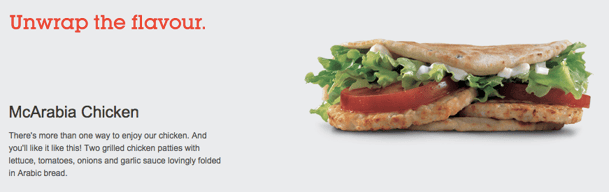
McDonald’s has also introduced macaroons to its French menu:

And added McSpaghetti to its menu in the Philippines:
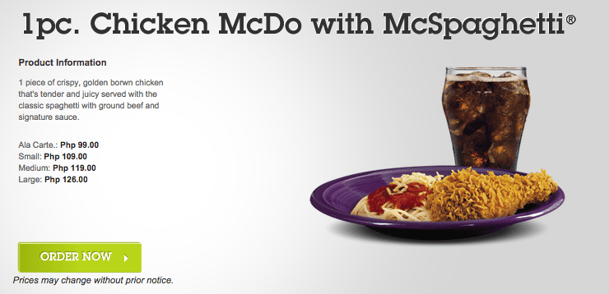
This “glocal” approach has helped put McDonald’s at #9 on Interbrand’s Best Global Brands 2014.  

10) Innocent Drinks

Innocent Drinks is the leading smoothie company in the U.K., but that’s not the only place you’ll find its products. In fact, Innocent products are now available in 13 countries across Europe.

And despite its widespread reach, the company’s “chatty branding” remains consistent across the board. For instance, the website is very bubbly, with contact information that reads “call the banana phone” or “visit the fruit towers.”
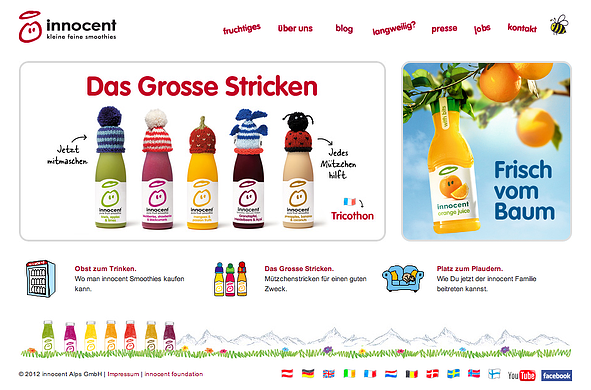
Screen Shot 2012 11 16 at 12.08.38 AM

While global expansion and rapid growth can sometimes distract a company from consistent branding, Innocent Drinks has managed to remain true to itself. By ensuring that the brand’s voice is interpreted the same way around the world, Innocent is able to create a more recognizable brand.

11) Unger and Kowitt

The phrase 'glocal’ can be defined as “Think Globally, Act Locally." But what happens when you switch the two around?

Woah, fasten your seat belts – literally. Unger and Kowitt is a traffic ticket law firm based in Fort Lauderdale defending drivers in the state of Florida. Not very global, right? Well, Unger and Kowitt understands that America is a melting pot and that Florida is bursting at the seams with different cultures and languages.
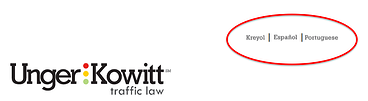
Screen Shot 2012 11 19 at 5.02.35 PM

Though a domestic service, the firm’s website is available in English, Spanish, Portuguese, and Creole. With these options, Unger and Kowitt can cater to Florida’s nearly 3.5 million Floridians who speak Spanish, Portuguese, or Creole. Don’t miss out on expanding your client base – sometimes you don’t have to look far to attract international business. 

12) Coca-Cola

Coca-Cola is a great example of a brand using international marketing efforts. Though a large corporation, Coca-Cola focuses on small community programs and invests a lot of time and money in small-scale charity efforts.

For example, in Egypt, Coca-Cola has built 650 clean water installations in the rural village of Beni Suef and sponsors Ramadan meals for children across the Middle East. In India, the brand sponsors the Support My School initiative to improve facilities at local schools. Not to mention, the brand sticks with selling an emotion that can’t get lost in translation: happiness. Now, tell me this doesn’t look like fun:

13) H&M

According to Interbrand, H&M is on track to increase new store openings by 10-15% a year. One of the secrets fueling its global expansion strategy?

Optimizing its online experience.
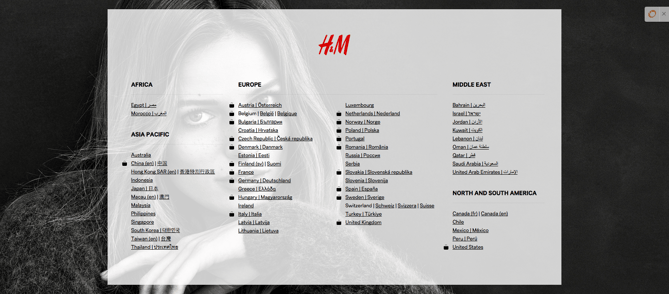
With an online shop available in 21 markets, including the U.S., H&M is doing everything in its power to create an easy-to-navigate, mobile-friendly online shopping experience.

What other brands out there do a great job with their international marketing? Let us know in the comment section below.

Editor’s Note: This post was originally published in November 2012 and has been updated for freshness, accuracy, and comprehensiveness.

download the best marketing and advertising campaigns


from HubSpot Marketing Blog http://bit.ly/1fGLoRX

Mobile Marketing


from Tumblr http://bit.ly/1Sg2UhN

8 of the Best B2B Publisher Email Newsletters

Producing email newsletters for B2B markets can be a vital part of your inbound marketing. Producing one, week after week, which actually gets read isn’t always so easy. Luckily, publications of all shapes and sizes can create great newslettersyou just have to know your audience and what they will find most engaging. 

To get your creative juices flowing, here are 8 of the best B2B email newsletters we’ve come across recently:

1) Food Safety Update

Not exactly a catchy title unless you happen to work in food and beverage manufacturing and don’t want to inadvertently make people sick. But to the right audience, Food Safety Update’s content is pure gold, presented in a clear and easily digestible manner. We like the clean design that’s smartly organized and well-labeled so readers know exactly what type of content they’ll be viewing (featured articles, sponsored white papers, events, products, etc.). They break up all that text with attractive thumbnails and tastefully designed display ads that don’t detract from the content. Unsubscribing is easy, as is social sharing.

2) GreenBuilder

GreenBuilder offers another tastefully designed newsletter that makes it easy to quickly find what you want. We especially like the text-only top with hyperlinks to featured articles—it gets you to the meat of the email fast. The graphics below help to separate additional linked articles with thumbnails and concise summaries. They also make it easy to share on social media with icons at the bottom, as well as text-based links at the top. The article titles are engaging and the writing is crisp and written with a very specific reader in mind.

3) InterDrone News

Yup! Would you believe there’s a really cool newsletter aimed at folks who build drones or use them in their work? Who knew? This newsletter is sparse on the bells and whistles, but has a super easy to read layout, direct and to-the-point writing, and the content stays on topic. The line breaks in particular are a great tool for moving readers’ eyes down the page. 

4) Dental Products Report

DPR writes catchy headlines and article titles that get dentists’ attention. We can see why it’s so popular. The layout and images are more reminiscent of a well organized website than a newsletter, and their use of topics along the top make for easy navigation. Their CTAs aren’t subtleit’s clear what actions they want you to take. But their copy is direct, benefits-laden, and clear. They also create a sense of urgency where appropriate and incorporate social proof with testimonials from other dentists.

5) Chemical Processing Weekly

As far as B2B newsletters go, this one is not what you would expect. Forget the clinical, scientific vibe. It has more of a retro, down-home feel. We especially like how they incorporate polls and a reader questions to get engagement up. The headlines appeal to chemical engineers, content is concise, well-organized and stays on topic, native ads are clearly identified. They keep the reader’s needs first by offering content from both their own publication, in addition to compiling top industry news from outside sources. 

6) Smart Meetings News

Aimed at corporate event planners, this newsletter is attractive and fun to read (e.g. How to Stay Healthy at Conferences Using a Smartwatch). We like how it’s organized—more timely news is up top, with industry articles and events following. They include polls for favorite hotels and venues, and make it easy to share as well as return to the main website. The colors are bright, the photos enticing, and social sharing a breeze.

7) SD Times’ Featured Resources

Software developers love this newsletter because it’s filled with valuable educational resources, each tied to a unique and relevant industry issue. We like the way they use color and white space—the design is inviting, cheerful, and easy to read. The CTAs aren’t buried  in the text, but bold and easy to engage with. 

8) SP TechCon News

This event-specific example gets right to the point. It shamelessly urges you to spend up your remaining training bucks at their upcoming conference. We like their direct style, and the alternating use of color for the different classes makes it easy to read. There’s no way any IT professional can mistake the message, and if the idea of Austin in February wasn’t luring enough—they also provide an extensive sample list of classes. 

Newsletters can be a great tool for any publisher, regardless of industry. Take a few notes from the examples above, and think about what your market is talking about, the expertise you have to offer, and how you can package these pieces into the most engaging format possible. These publishers knocked it out of the park, now it’s your turn. 

  free guide: your database sucks


from HubSpot Marketing Blog http://bit.ly/1I15ArI

Mobile Marketing


from Tumblr http://bit.ly/1fGD9FF